Assessing Noise from Air Source Heat Pumps – Why Early Acoustic Input Matters
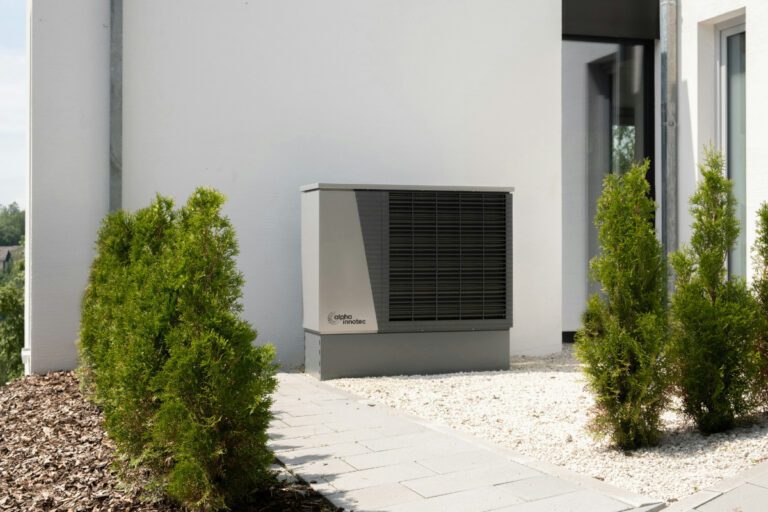
As the transition toward low-carbon heating continues, Air Source Heat Pumps (ASHPs) are becoming an increasingly common feature of residential and mixed-use developments throughout London and the wider UK.
While heat pumps provide clear sustainability benefits and support decarbonisation objectives, their acoustic impact is receiving increasing scrutiny from local planning authorities and Environmental Health Officers. In many cases, noise associated with external heat pump units can become a material planning consideration, particularly within dense urban environments or where neighbouring residential properties are nearby.
At ARM Acoustics, we regularly assist architects, developers and M&E consultants with the assessment and mitigation of noise from air source heat pumps in support of planning applications and detailed design.
Why Are Air Source Heat Pumps Becoming a Planning Issue?
In some cases, Air Source Heat Pumps (ASHPs) can be installed under permitted development rights without the need for a full planning application, provided specific criteria are satisfied, including restrictions relating to factors such as number and size of units, location, visual appearance and effects on amenity, including compliance with the noise limits set out within MCS020a. However, planning permission is likely to be required where developments fall outside these permitted development criteria, or involves listed buildings or conservation areas.
Early acoustic advice can help identify the most suitable approach, support compliance and avoid costly redesign or planning delays.
Although modern ASHPs are generally quieter than previous generations of equipment, they still generate operational noise from:
- compressor operation;
- fans and airflow;
- vibration transmission;
- defrost cycles and variable operating conditions.
Potential issues commonly arise where units are proposed:
- close to neighbouring dwellings;
- within terraces or courtyards;
- on roofs near residential façades;
- within constrained urban sites;
- adjacent to noise-sensitive rooms or amenity spaces.
Where permitted development does not apply, local authorities are increasingly requesting acoustic assessments to demonstrate that proposed systems will not adversely affect neighbouring occupiers, particularly during night-time operation when background sound levels are lower. In such cases, assessments are generally undertaken in accordance with BS4142:2014+A1:2019 and local planning policy requirements, along with consideration of guidance from the Institute of Acoustics and CIEH.
Further information regarding recent heat pump guidance can be found here:
The Importance of Early Acoustic Engagement
One of the most common issues we encounter is acoustic input being sought only after designs, including equipment selection and layout have already been fixed. At that stage, projects can encounter planning delays due to the need to carry out noise impacts assessment, and additional costs for redesign and / or construction due to re-selection or relocation of plant, specification of acoustic mitigation etc.
Engaging an acoustic consultant early in the design process can often avoid these issues entirely.
Early-stage acoustic input allows us to support homeowners, architects and planning consultants to optimise:
- equipment selection for lower noise units;
- plant location, including consideration of distance, orientation and inherent screening;
- acoustic mitigation, where necessary, including acoustic screening or enclosure;
- vibration isolation;
- integration with architectural design.
This can significantly reduce both mitigation requirements and overall project costs while improving the likelihood of achieving planning approval without unnecessary delay.
Practical and Proportionate Solutions
At ARM Acoustics, our approach is focused on practical, proportionate and commercially realistic solutions.
Rather than applying overly conservative mitigation measures, we work collaboratively with the client or design team to identify efficient strategies appropriate to the specific site and planning context.
Supporting Planning Applications
Our services commonly include:
- baseline environmental noise surveys;
- BS4142 assessments;
- heat pump noise impact assessments;
- review of manufacturer acoustic data;
- mitigation design advice;
- reports in support of planning applications;
- discharge of planning conditions.
We understand the importance of responsive advice and clear reporting within planning and construction programmes, particularly where multiple consultants and stakeholders are involved.
Further information regarding our planning consultancy services can be found here:
Discuss Your Project
If you are involved in a project where air source heat pumps or external plant may require acoustic assessment, early engagement can often help simplify the process, reduce mitigation costs and support a smoother route through planning.
To discuss a project or obtain further information, please contact us:
London Acoustic Consultants for Planning and Development Projects